PremiumBabyEssentials
Journal · · 4 min read
Silicone, Bamboo or Plastic: Which Baby Plates to Choose
It is seven in the morning, the porridge is just right, and the plate is already on its way to the floor. Before you buy another one, here is what each material is really like at a family table.
The short answer
No material wins at everything. Silicone is the easiest all-rounder for everyday family meals, solid bamboo looks lovely but asks for hand-washing, plastic is light and familiar but needs care around heat, and stainless steel lasts for years but stays out of the microwave.
The right choice depends less on the material itself and more on how you live: dishwasher or sink, warming food or serving it cold, high-chair tray or kitchen table.
- Dishwasher: silicone — usually yes · solid bamboo — usually no · plastic — the AAP suggests not · steel — usually yes.
- Microwave: silicone — check the label · bamboo — no · plastic — the AAP suggests not · steel — no.
- Drops: silicone bounces · bamboo can crack · plastic can scratch · steel can dent.
- Feel at the table: soft · warm and natural · light · cool and solid.
Silicone: soft, flexible and easy to live with
Silicone is everywhere in baby feeding sets, and it is easy to see why.
What parents like:
- It does not shatter or chip when it meets the floor, which it will.
- It copes with heat and cold. Good food-grade silicone pieces are often dishwasher, microwave and freezer safe — always check the label of the exact product.
- It grips. Most suction bases are made of silicone, so a silicone plate can hold onto a smooth tray on its own.
What to know:
- It can pick up strong scents. A heavily perfumed dish soap can leave a soapy smell or taste. A fragrance-free detergent and a good rinse usually solve it.
- Bright foods can tint it over time. Tomato, carrot and turmeric are the usual suspects; washing soon after the meal helps.
- Quality varies. Look for the words food-grade, a clear free-from list and named test standards, not just a badge.
Bamboo: beautiful, but know which kind you are buying
Two very different products are sold under the word bamboo.
Solid bamboo is cut from the plant itself. It feels warm and natural, it is light, and it looks wonderful on a table. In return it usually asks for hand-washing, quick drying and no microwave.
Bamboo composite is something else: ground bamboo fibre mixed into plastic. The European Commission warns that most plant-based additives such as bamboo have not been assessed for safety in plastic tableware, and that many such items have degraded and released formaldehyde and melamine into food, sometimes above safe levels.
The same document gives a simple way to tell them apart: composites feel smooth, like plastic, while solid bamboo keeps the natural structure and look of the plant.
Plastic and stainless steel
Plastic: light and familiar — read the label
Plastic plates are light, rarely break and are easy to find in every shop. Two things are worth knowing.
- BPA. In 2012 the US Food and Drug Administration stopped providing for BPA-based polycarbonate in baby bottles and sippy cups. The FDA notes this followed manufacturers abandoning that use rather than a safety ruling. BPA-free is now the baseline for baby items, not a bonus.
- Heat. The American Academy of Pediatrics guidance for paediatricians suggests families avoid microwaving food in plastic containers and keep plastic food containers out of the dishwasher, and avoid recycling codes 3, 6 and 7 when possible.
If you warm food often or rely on the dishwasher, that advice matters in daily life.
Stainless steel: the long-lasting option
Stainless steel is tough, does not hold onto smells and usually goes in the dishwasher. It is a sensible choice for families who want something that lasts for years.
The trade-offs: it cannot go in the microwave, it can feel cold and noisy on a tray, and it usually needs a separate silicone base to stay put.
How we chose for SofiAl
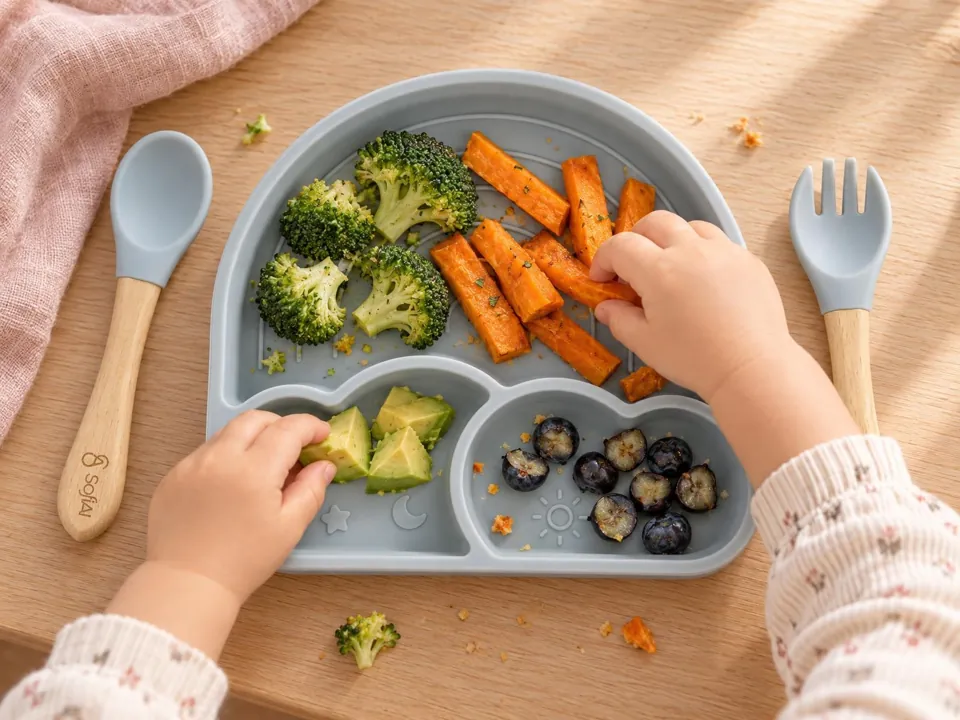
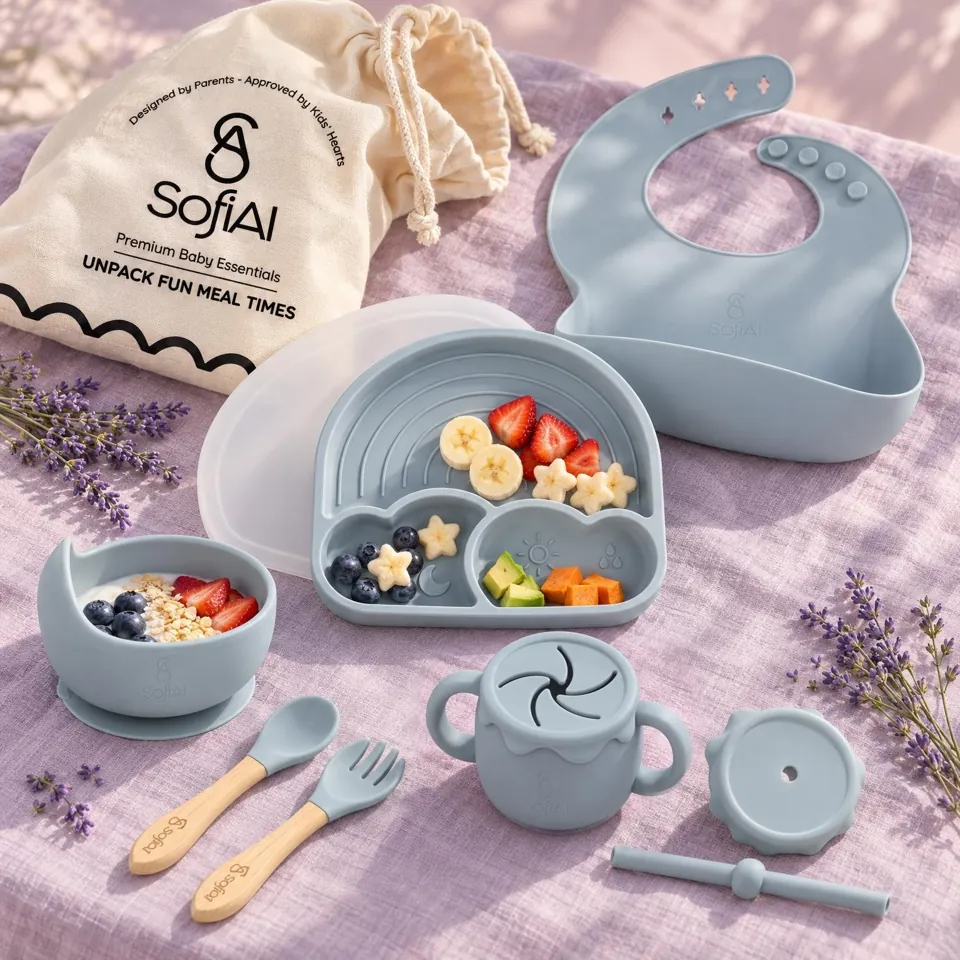
We are parents in Dubai, and we chose food-grade platinum silicone for our premium baby tableware because it fits real family kitchens. The silicone pieces are dishwasher, microwave and freezer safe, and the material is free from BPA, PVC, phthalates and lead. The spoon and fork are beech wood, so there is still a natural touch at the table.
Every set is independently lab-tested to CPSIA (USA), Canadian lead and phthalate limits, and EN 14350 and EN 14372 (EU). You can read what each standard covers on our safety page.
If you would like one matching set for the whole journey from first purées to the family table, have a look at the Full Set — or begin with a smaller Mini Set.
Frequently asked
Is silicone better than plastic for baby plates?
Are bamboo baby plates a good choice?
Can stainless steel baby plates go in the microwave?
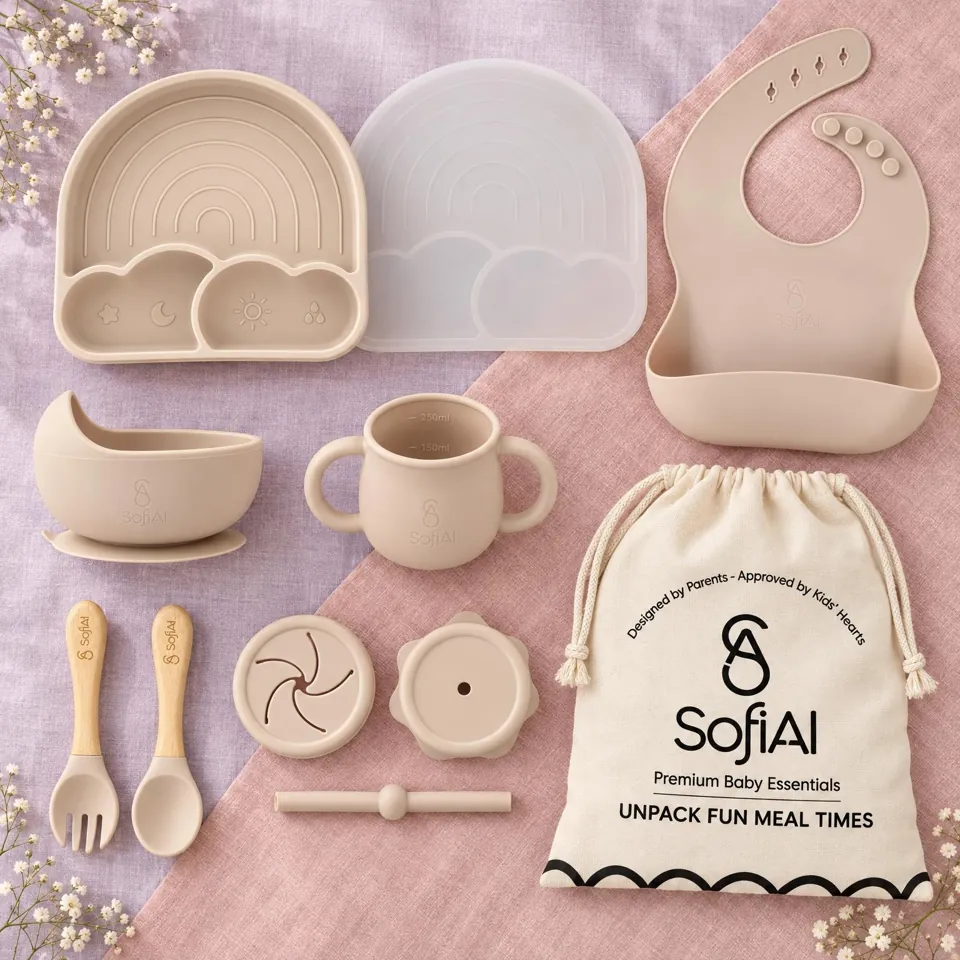
The SofiAl Full Set
11 pieces for every mealtime
Premium baby tableware in Rose Pink, Dusty Blue or Royal Beige — from 6 months, gift-ready in a branded eco bag.