PremiumBabyEssentials
Journal · · 3 min read
Do Suction Plates Really Stay Put? How to Use Them Right
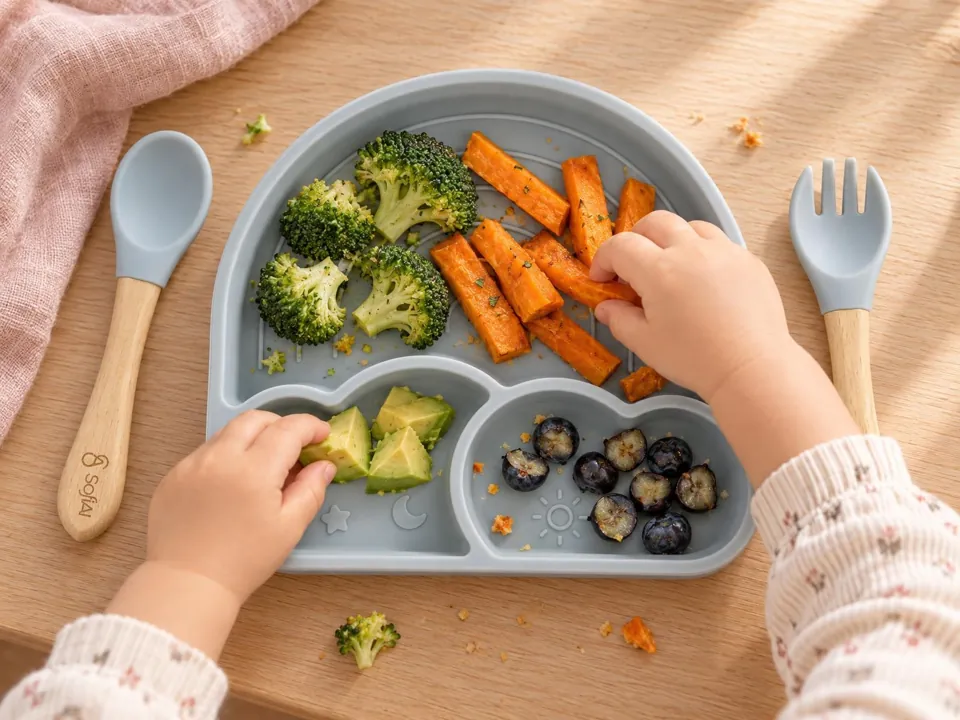
The plate goes down, a small hand finds the edge, and lunch takes off. A suction plate can stop that — when the surface is right and the plate is pressed the right way.
The short answer
Yes, suction plates work — on a clean, smooth, flat and dry surface, pressed down properly. They are not glue. A determined baby can still lift an edge, and on textured or wet surfaces the seal weakens.
Think of a suction plate as a calmer table, not a mess-free one. When it holds, more food stays in reach and less ends up on the floor.
Where suction works — and where it struggles
Suction needs an airtight seal, so the surface matters more than the plate.
Usually works well on:
- smooth plastic high-chair trays
- glass tables
- sealed, smooth wood
- flat stone or laminate worktops
Often struggles on:
- textured or patterned trays
- oiled or unsealed wood, cracks and joins
- wet, greasy or crumb-covered surfaces
- trays that are narrower than the base, curved, or raised in the middle
Before you buy, measure the flat part of your tray. The whole base needs to sit on a flat area, not across a seam or a rim.
How to make a suction plate stick: five steps
- Wash and dry the base and the tray. A drop of water or a single crumb is enough to break the seal.
- Place the plate in the middle of a flat area, away from edges and joins.
- Press down from the centre outwards to push the air out from under the base.
- Give it a gentle tug at the edge. If it lifts easily, wipe both surfaces and press again.
- Add the food after the plate is fixed. A full plate is harder to press flat.
That last step makes a surprising difference. Fix first, serve second. And if your baby is in a phase of testing everything, a little food at a time is easier to keep in place than a full plate.
When it slides — or sticks too well
Why does my suction plate slide?
When a plate that used to hold starts sliding, the cause is usually small.
- A film on the base or tray. Food oils and soap residue stop the seal forming. Wash both in warm soapy water and rinse well.
- Dust or lint on the base. Silicone can pick up fluff from tea towels. A rinse and air-dry fixes it.
- The wrong spot. Even a slight curve or a textured patch under one side lets air in.
- Sideways pushing. Suction resists pulling up better than pushing sideways. A baby sliding the plate along the tray will sometimes win.
Our care guide covers keeping the base clean, which is most of the secret.
How to take it off without a tug of war
To release a suction plate, lift one edge of the base to let air in. The seal lets go straight away.
Pulling straight up from the middle only makes the seal hold harder, which is why it can feel stuck. Older toddlers can learn the same trick when they help clear the table, and it turns pulling the plate off into helping.
Suction is a helper, not a babysitter
A plate that stays put gives your baby time to explore each food without chasing it. It does not replace being at the table.
The NHS advises that you always stay with your baby when they are eating, and the CDC recommends that children sit up in a high chair or other safe place while they eat. If you have questions about your baby's eating, check with your paediatrician.
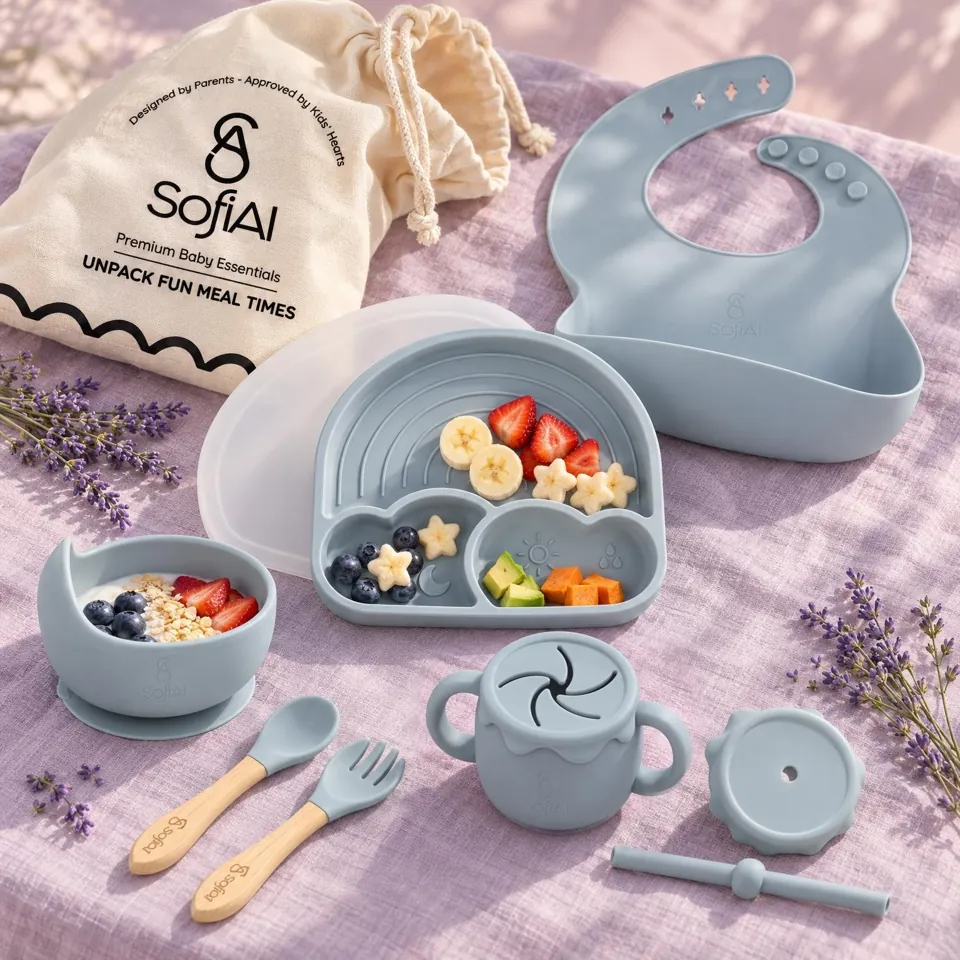
In a SofiAl set, both the divided suction plate and the suction bowl in our Full Set have suction bases, so a plate for finger foods and a bowl for purées can both stay where you put them. The silicone pieces go in the dishwasher, which keeps the bases clean and ready to grip.
If you only need one piece to begin with, our Mini Sets come with either a suction plate or a suction bowl.
Frequently asked
Do suction plates work on wooden tables?
Can a baby pull off a suction plate?
Why does my suction bowl stick so hard I can't lift it?
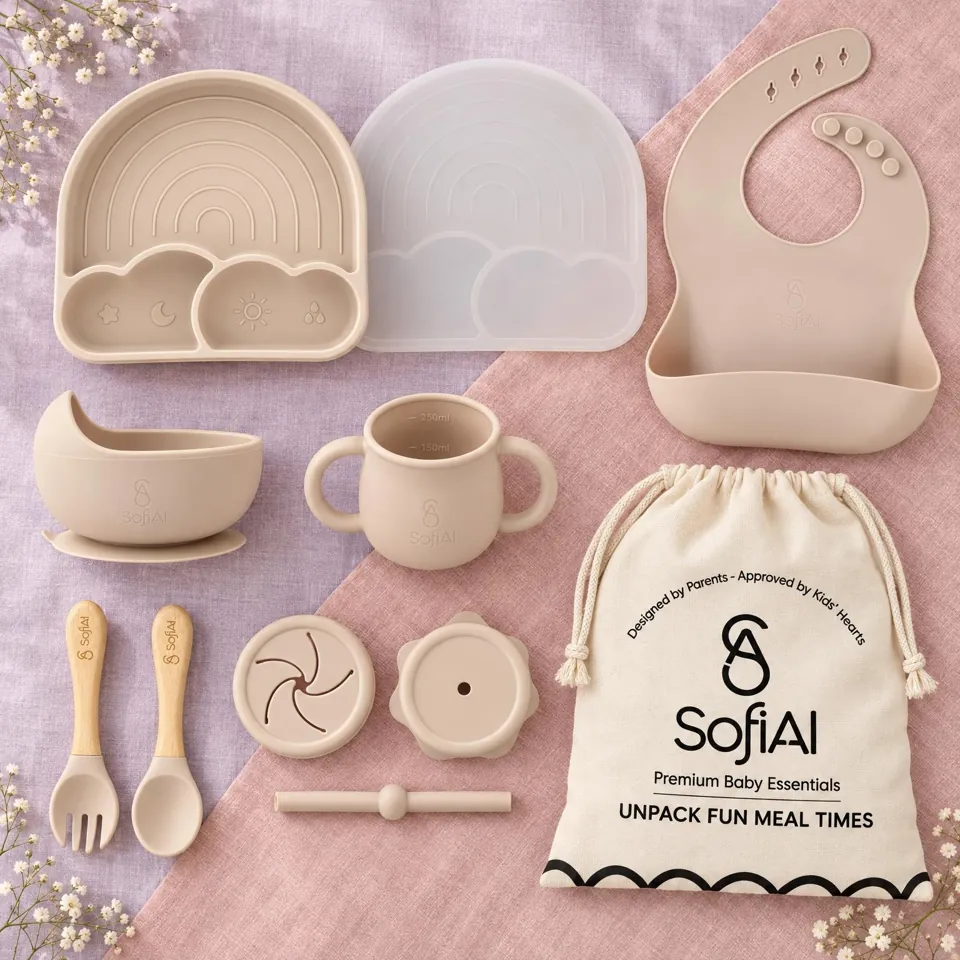
The SofiAl Full Set
11 pieces for every mealtime
Premium baby tableware in Rose Pink, Dusty Blue or Royal Beige — from 6 months, gift-ready in a branded eco bag.