PremiumBabyEssentials
Guide
Baby-Led Weaning: A Simple Guide for Parents
Starting solids is a gentle, gradual process. This guide collects what the American Academy of Pediatrics, the NHS and the World Health Organization say about when and how to begin — and which pieces of a feeding set help at each step. It is general information, not medical advice: please talk to your pediatrician about your baby.
When to start
The WHO recommends exclusive breastfeeding for the first 6 months and introducing nutritionally adequate, safe complementary (solid) foods from six months. The NHS and the AAP say the same: around 6 months, alongside breast milk or formula.
Readiness matters more than the calendar. The NHS lists three signs: your baby can stay in a sitting position and hold their head steady, can co-ordinate eyes, hands and mouth to pick food up and put it in their mouth, and can swallow food rather than push it back out. The AAP adds: good head control in a high chair and opening the mouth when food comes their way.
Three stages — and what helps
- 01
From 6 months
First spoonfuls
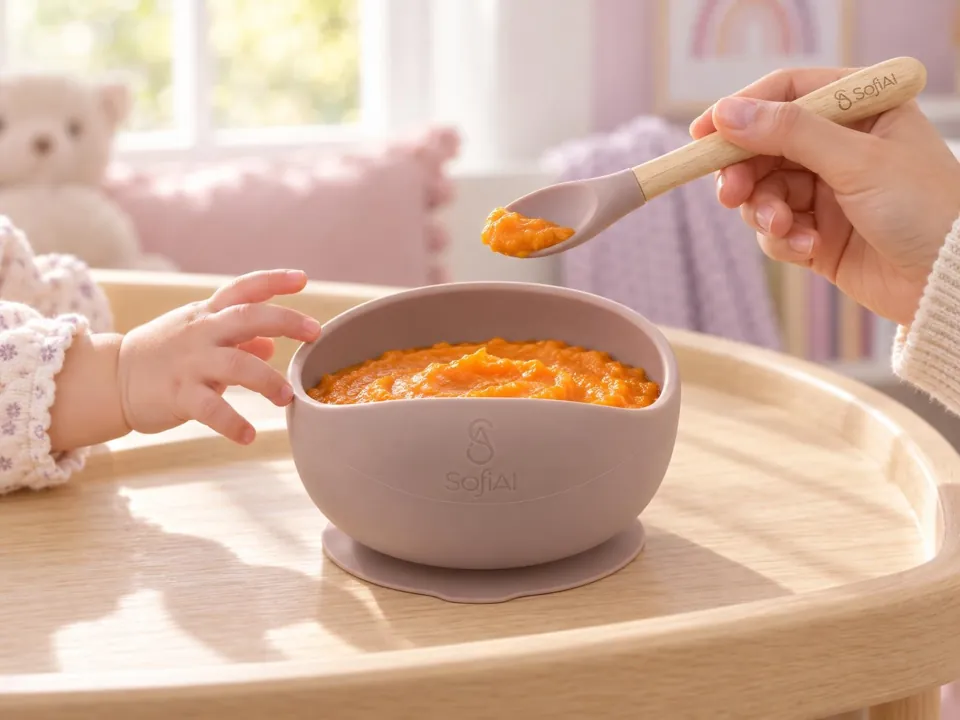
The AAP suggests starting with half a spoonful or less and introducing one single-ingredient food every 3–5 days to spot reactions. A deep suction bowl that stays on the tray and a soft-tip spoon make these first tastes calmer.
- 02
Self-feeding
Finger foods
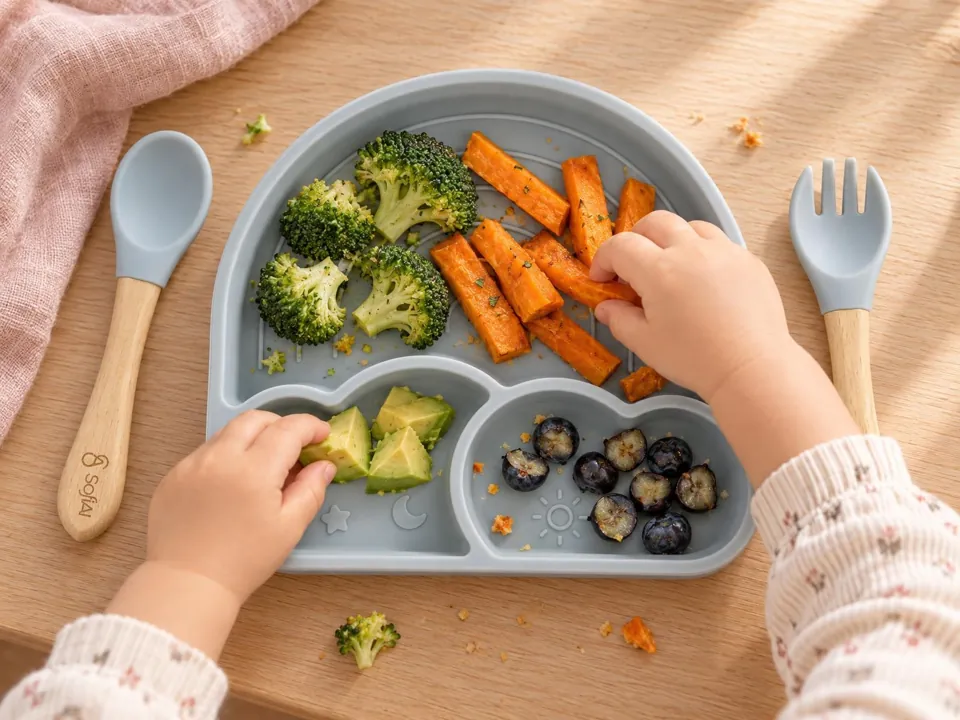
Once a baby can sit up and bring hands to their mouth, the AAP says you can offer finger foods — soft, easy to swallow and cut into small pieces. A divided suction plate keeps foods apart and in reach.
- 03
Drinking
First sips
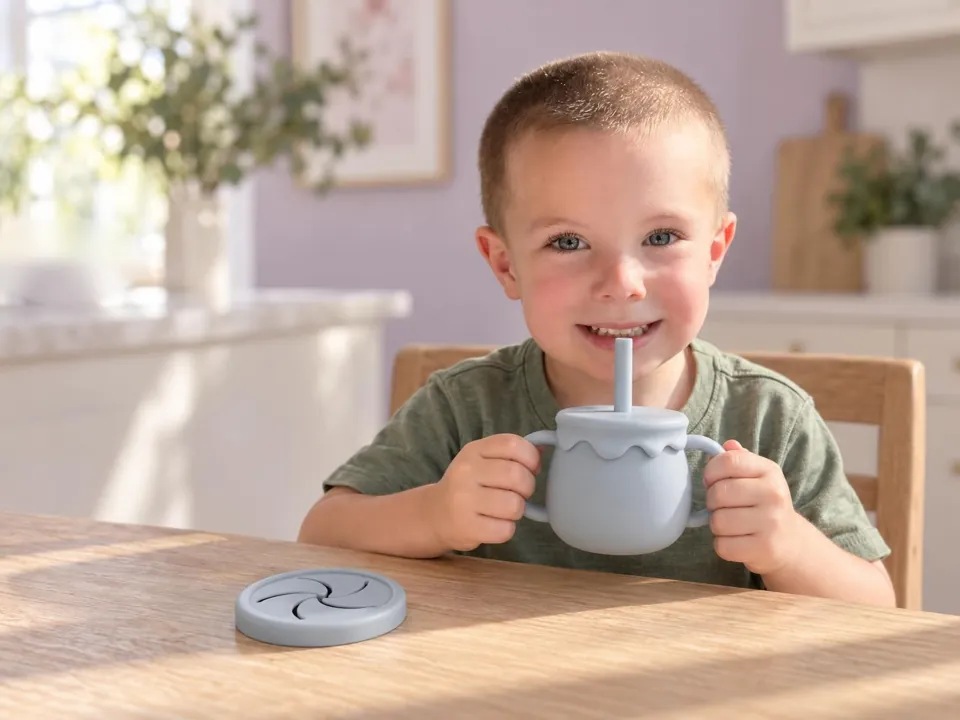
A cup with a drinking lid and straw, then an open cup, helps the move away from the bottle. Water with meals; the NHS advises no cows' milk as a main drink before 12 months.
Safety first
What the sources agree on:
- Always stay with your baby while they eat (NHS).
- Gagging is normal while babies learn to chew and swallow; choking is different — know the difference (NHS).
- Avoid foods that can cause choking: whole grapes, raw carrots and other hard chunks (WHO, AAP). The AAP also lists nuts and seeds, popcorn, hot dogs and hard sticky sweets for children under one.
- Sit upright in a high chair with a securely fitted harness (NHS).
- Allergenic foods (such as peanuts, eggs, fish) can be introduced from around 6 months, one at a time in small amounts (NHS) — ask your pediatrician if there is a family history of allergy.
What you need
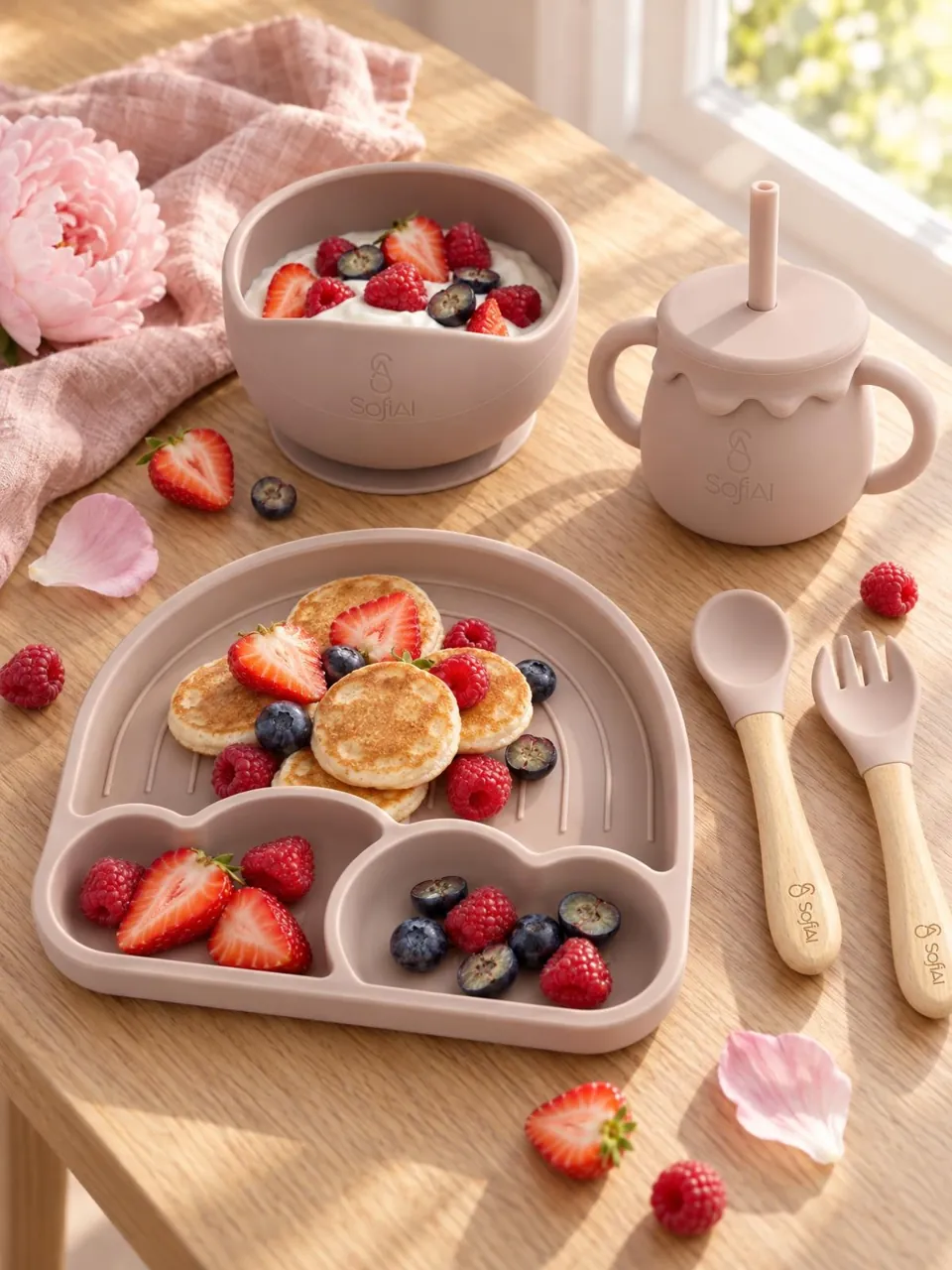
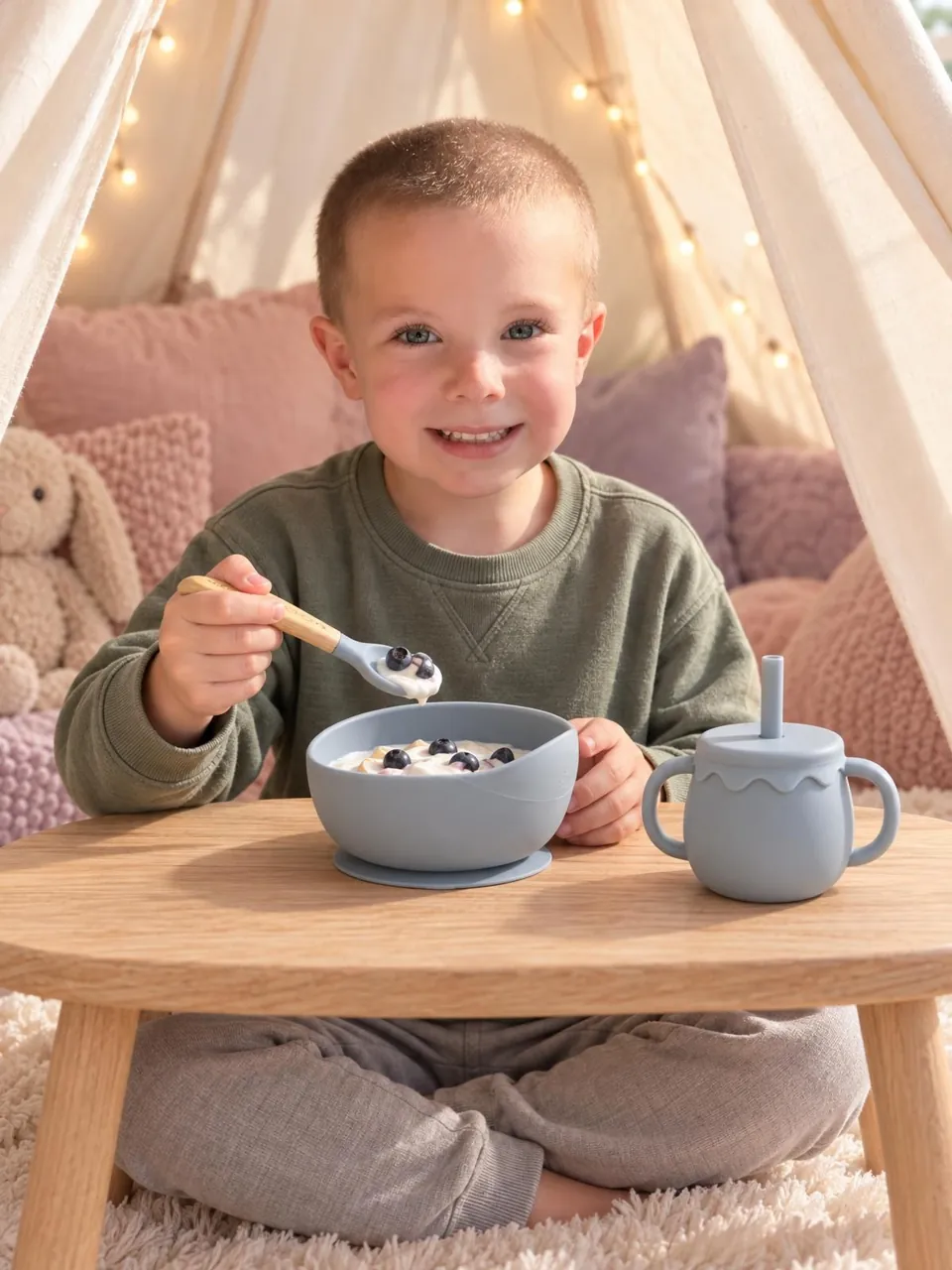
A high chair, a bib, a bowl and a plate that stay put, a soft spoon and a cup. The SofiAl Full Set covers the table side: a suction bowl for purées, a 3-section suction plate for finger foods, a soft-tip beech-wood spoon and fork, an adjustable waterproof bib and a cup with a drinking lid and a snack lid. Everything is dishwasher, microwave and freezer safe.
Sources
Checked on 16 October 2026 — all pages open.
- American Academy of Pediatrics — When Can Babies Start Solid Foods?HealthyChildren.org
- NHS — Your baby's first solid foodsnhs.uk
- World Health Organization — Complementary feedingwho.int
- World Health Organization — Infant and young child feedingwho.int
This guide is general information for parents and is not medical advice. Every baby is different — please talk to your pediatrician before starting solids.
Where to buy
Choose your country
Prices, delivery and stock are shown on Amazon — tap a button to open our official listing.
🇺🇸Amazon USA
- Full Set — Rose Pink, Dusty Blue, Royal Beige
- Mini Sets — plate or bowl
- Baby's First Christmas set
🇦🇪Amazon UAE
- Full Set — Rose Pink, Dusty Blue, Royal Beige
- Delivered by Amazon in Dubai, Abu Dhabi and across the Emirates